UFO Disclosure and Government Cover-ups
Claims that governments worldwide are concealing evidence of extraterrestrial contact and advanced alien technology.
Tracking Conspiracy Theories — Old, New, Emerging, Evolving
Claims that governments worldwide are concealing evidence of extraterrestrial contact and advanced alien technology.
The "UFO disclosure" conspiracy theory posits that governments, particularly that of the United States, possess secret information regarding Unidentified Flying Objects (UFOs), now often referred to as Unidentified Anomalous Phenomena (UAPs), and "non-human intelligence" (NHI). This secret information is believed to include evidence of alien life forms, recovered alien technology, and ongoing interactions or a "secret space program" involving these entities. The central tenet of the disclosure movement, a social movement advocating for this theory, is that this suppressed information should be declassified and released to the public for the advancement of human society and science. Adherents anticipate a climactic event, termed "disclosure," when this alleged information will finally be made public.
The UFO disclosure theory has spurred significant real-world events and movements. It has fueled a social movement that advocates for governmental transparency on UFO/UAP information, with grassroots initiatives and lobbying efforts aimed at compelling disclosure. This pressure has contributed to increased institutional attention to UAPs, including formal congressional hearings where military personnel and former intelligence officials have provided sworn testimony. Legislation, such as the UAP Disclosure Act of 2023, has been proposed to expedite the release of UFO-related information and establish formal UAP records collection processes. The movement has also influenced popular culture, with films and TV shows like "The X-Files" incorporating themes of government cover-ups of alien encounters. In recent times, statements from former presidents like Barack Obama and Donald Trump regarding UAPs have further fueled public interest and speculation.
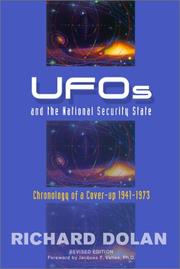
UFO conspiracy theories, which form the basis of the disclosure movement, originated in the 1940s, with claims of government cover-ups appearing in pulp magazines as early as October 1947. The first "alien bodies" conspiracy theory emerged in late 1949. Donald Keyhoe, a former U.S. Marine Major, became a prominent voice in the 1950s, publicly accusing elements within the U.S. government of conspiring to cover up knowledge of flying saucers. The concept of "disclosure" as a specific event or process gained traction over time, particularly from the 1990s onward, with a renewed interest in UFO conspiracy theories fueled by popular culture and the internet. In the 21st century, the movement evolved with former government and military officials increasingly coming forward with claims of secret programs and advocating for transparency, notably after a 2017 New York Times investigation revealed the existence of the Pentagon's Advanced Aerospace Threat Identification Program (AATIP).
Mainstream scientific and official institutions generally regard the core claims of UFO disclosure theory with skepticism due to a lack of empirical evidence. While governments, including the U.S., acknowledge the existence of Unidentified Aerial Phenomena (UAPs) and have initiated programs like the All-domain Anomaly Resolution Office (AARO) to investigate them, official reports consistently state that no evidence of extraterrestrial beings or alien technology has been found. For example, the Department of Defense's AARO, in its 2024 report, affirmed the absence of UFO information available to disclose that would substantiate claims of alien presence. Experts like astrophysicist Neil deGrasse Tyson emphasize that most unidentified phenomena can be explained by optical, climatic, or astronomical factors, or are simply lacking sufficient data for analysis. Critics of the disclosure movement argue that while "unidentified" objects exist, there is no conclusive scientific evidence to link them to extraterrestrial origins or a deliberate government cover-up, often describing disclosure advocacy as relying on confirmation bias and speculative claims rather than verifiable proof.