The Roswell Cover-up
The allegation that the US government recovered an extraterrestrial spacecraft and its occupants near Roswell, New Mexico in 1947 and has hidden the evidence since.
Tracking Conspiracy Theories — Old, New, Emerging, Evolving
The allegation that the US government recovered an extraterrestrial spacecraft and its occupants near Roswell, New Mexico in 1947 and has hidden the evidence since.
The "Roswell Cover-up" is a prominent conspiracy theory alleging that in July 1947, the United States military recovered a crashed extraterrestrial spacecraft and its occupants near Roswell, New Mexico, and subsequently engaged in an extensive cover-up to conceal this event from the public. The theory posits that what the military initially announced as a "flying disc" was quickly retracted and replaced with the explanation of a conventional weather balloon, serving as a diversion to hide the truth of an alien encounter. This alleged governmental concealment is believed by proponents to be an effort to prevent mass panic and to potentially reverse-engineer alien technology.
The Roswell Cover-up theory has had a significant real-world impact, becoming deeply embedded in popular culture and contributing to public distrust in government institutions. It has inspired countless books, documentaries, films, and television shows, making "Roswell" synonymous with UFOs and alien encounters. The town of Roswell itself has embraced its association with the incident, promoting itself as a hub for UFO-associated tourism, with the International UFO Museum and Research Center and an annual UFO festival. The theory also fueled a broader fascination with conspiracy theories, particularly after events like the Watergate scandal and declining trust in the US government in the 1970s.
The Roswell incident originated in July 1947 when the Roswell Army Air Field (RAAF) issued a press release stating it had recovered a "flying disc" from a local ranch. This announcement quickly made international headlines but was retracted within a day, with the military claiming the debris was from a conventional weather balloon. The incident largely faded from public memory for decades.
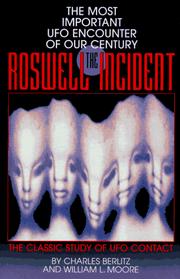
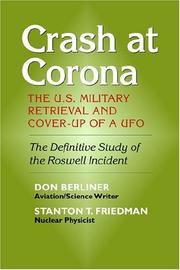
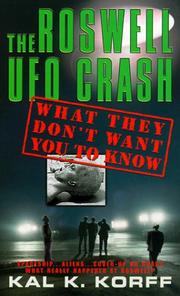
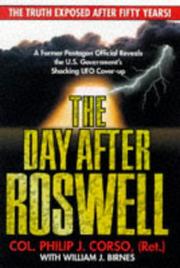
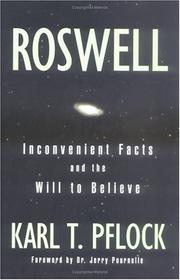
The theory was revived and gained significant traction in 1978 when retired Major Jesse Marcel, who had been involved in the initial recovery, stated in an interview that the weather balloon explanation was a cover story and that he believed the debris was extraterrestrial. This speculation was further popularized by the 1980 book The Roswell Incident by Charles Berlitz and William L. Moore, which introduced claims of unusual debris and the government concealing evidence of alien beings. Over time, the theory evolved to include more elaborate claims such as multiple crashed flying saucers, alien corpses, autopsies, and the reverse-engineering of extraterrestrial technology.
The mainstream perspective, supported by official investigations, refutes the extraterrestrial claims of the Roswell incident. In the 1990s, the U.S. Air Force published multiple reports, including a 1994 report and "The Roswell Report: Case Closed" in 1997, which concluded that the debris recovered in 1947 was from a top-secret military balloon train associated with Project Mogul. Project Mogul was a classified program designed to detect Soviet nuclear tests using high-altitude balloons equipped with acoustic sensors.
The Air Force reports also addressed claims of alien bodies, suggesting they were likely a result of witnesses consolidating memories of unrelated events, such as seeing anthropomorphic test dummies dropped from high-altitude balloons during later military experiments in the New Mexico desert, or misidentifying injured or deceased human personnel from other accidents. Experts and fact-checkers generally view the alien crash theory as lacking substantial evidence and consider the Air Force's explanation to be credible, attributing the persistence of the conspiracy to a distrust of government and the allure of the unknown.