Harold Wilson KGB Allegations
Allegations that British PM Harold Wilson was secretly a KGB spy, a claim dismissed by most historians but popularized by certain defectors and MI5 officers.
Tracking Conspiracy Theories — Old, New, Emerging, Evolving
Allegations that British PM Harold Wilson was secretly a KGB spy, a claim dismissed by most historians but popularized by certain defectors and MI5 officers.
The "Harold Wilson KGB Allegations" encompass a conspiracy theory suggesting that former British Prime Minister Harold Wilson was a Soviet agent, or at the very least, a person susceptible to Soviet influence. This theory is closely intertwined with the "Wilson Plot," which posits that elements within British intelligence, particularly MI5, and potentially the military, conspired to destabilize or even overthrow his Labour government during his two terms in office (1964–1970 and 1974–1976). The general scope of the theory claims to explain Wilson's political trajectory and certain internal British political events through the lens of Cold War espionage and alleged internal plots against a democratically elected leader.
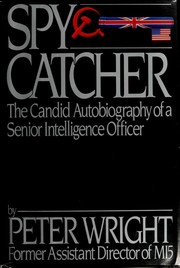
The allegations surrounding Harold Wilson and the "Wilson Plot" led to significant political controversy and internal inquiries in Britain. Wilson himself expressed fears of being spied on and undermined during his second term in office. These fears became public in a 1977 Observer article, prompting an internal inquiry by then-Prime Minister James Callaghan, which found no grounds for the allegations. The claims resurfaced with the publication of Peter Wright's book Spycatcher in 1987, leading to further investigations, though again, no evidence of a plot or surveillance by the Security Service was found. The controversy also contributed to debates about the oversight and accountability of intelligence agencies.
The "Harold Wilson KGB Allegations" theory originated in the early 1960s with the claims of Soviet defector Anatoliy Golitsyn. Golitsyn suggested that a "Western opposition leader" was a Soviet agent and later, after Hugh Gaitskell's death, connected it to a supposed KGB assassination to install Wilson. These claims were largely dismissed by the majority of intelligence officers but were taken seriously by some, including the CIA's James Angleton and MI5's Peter Wright. The theory gained significant public traction and evolved in the mid-1970s and 1980s when Harold Wilson himself publicly expressed concerns about surveillance and a "whispering campaign" against him by elements within the security services. Wright's unauthorized memoir, Spycatcher, published in 1987, further publicized and elaborated on the alleged MI5 plot, including the codename "Clockwork Orange" for a smear campaign, which led to renewed public and official scrutiny. More recently, documentaries and declassified files have continued to explore and discuss these allegations.
The mainstream perspective, including official inquiries and the views of many experts and historians, largely dismisses the "Harold Wilson KGB Allegations" and the existence of a concerted "Wilson Plot" by MI5. Official inquiries, including those ordered by Prime Minister James Callaghan in 1977 and another internal MI5 review after the Spycatcher allegations, found no evidence to substantiate claims of a plot or electronic surveillance of Wilson by British intelligence agencies. Christopher Andrew, the official historian for MI5, has described Golitsyn, a key source for the allegations, as an "unreliable conspiracy theorist." While MI5 did maintain a file on Wilson, codenamed "Henry Worthington," from 1945 due to his early contacts with Eastern European businessmen and known KGB officers, no actual evidence was ever found that he was a spy or acted on anything other than his own convictions. Former MI5 Director-General Baroness Manningham-Buller explicitly stated, "There was no plot, no conspiracy." The consensus among official bodies and many historians is that there is no credible evidence to support the idea that Harold Wilson was a Soviet agent.