Eurabia
An Islamophobic conspiracy theory alleging a plot between European and Arab entities to Islamize and Arabize Europe, thereby undermining its existing culture.
Tracking Conspiracy Theories — Old, New, Emerging, Evolving
An Islamophobic conspiracy theory alleging a plot between European and Arab entities to Islamize and Arabize Europe, thereby undermining its existing culture.
"Eurabia" is a far-right and Islamophobic conspiracy theory that suggests a deliberate plot by globalist entities, purportedly led by French and Arab powers, to "Islamize" and "Arabize" Europe. This alleged plot aims to weaken Europe's existing culture, undermine its alliances with the United States and Israel, and ultimately transform it into a subservient "Eurabia". The theory claims that this process is occurring through mass Muslim immigration and higher birth rates among Muslim populations, which will eventually lead to Muslims forming a majority and seizing control of the continent, imposing Islamic law.
The Eurabia theory has significantly influenced far-right and anti-Islam movements, gaining public interest and being adopted by populist politicians. It was a major ideological inspiration for Anders Behring Breivik, the perpetrator of the 2011 Norway attacks, who extensively discussed and supported the theory in his manifesto, leading to increased mainstream media attention for "Eurabia". The theory is used by populist leaders to frame Muslim migration as a threat to European culture and identity and to cultivate Islamophobia. In Germany, the far-right party AfD used "Eurabia" in its 2019 European Parliament election campaign. The narrative has also spread through social media, influencing anti-immigration political positions and being reinforced by refugee waves.
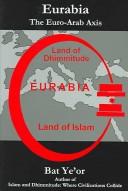
The term "Eurabia" first appeared in the 1970s as the title of a newsletter from a Euro-Arab friendship committee. However, the modern conspiracy theory was developed by Bat Ye'or (Gisèle Littman) in the early 2000s and fully articulated in her 2005 book, Eurabia: The Euro‐Arab Axis. Ye'or's thesis claims the theory is a result of the Euro-Arab Dialogue, established after the 1973 oil crisis, which she asserts was a French-led European policy to align with Arab countries against the US and Israel. The narrative gained traction after the 9/11 attacks and received renewed interest following Anders Behring Breivik's 2011 attacks, which brought the theory to widespread mainstream media attention. Over time, it has evolved to incorporate themes like "the Great Replacement" theory, emphasizing demographic anxieties and the notion of a deliberate ethnic substitution of white Europeans by migrants.
The "Eurabia" theory is widely dismissed by experts, fact-checkers, and official institutions as an Islamophobic, extremist, and unfounded conspiracy theory. Academics initially showed little interest due to its lack of factual basis, treating it within studies of right-wing extremism. Criticism intensified after Breivik's attacks. Scholars and journalists have described it as "scaremongering," "ludicrous," and akin to the antisemitic Protocols of the Elders of Zion. Experts point out that demographic predictions are often tricky and that Muslim population growth rates tend to decline with integration, and Muslims are not a monolithic group seeking to impose Sharia law. The theory is seen as simplifying complex interactions into an "us against them" narrative and is recognized as a core component of Islamophobia.