Deep State in the United States
The notion of a 'power elite' within the federal government that manipulates policy and works against elected officials.
Tracking Conspiracy Theories — Old, New, Emerging, Evolving
The notion of a 'power elite' within the federal government that manipulates policy and works against elected officials.
The "Deep State" in the United States is a political conspiracy theory that posits the existence of a clandestine network operating within the U.S. federal government. This network, believed to be composed primarily of unelected officials within the intelligence community, law enforcement, and military, along with elements from the financial and industrial sectors, is thought to exert significant, undue influence over national policy and decision-making, independent of elected leaders. Proponents of the theory claim this shadow government works behind the scenes to pursue its own agendas, often in opposition to the will of the politically elected administration, and seeks to maintain its power and influence.
The "Deep State" conspiracy theory has significantly impacted political discourse in the United States, particularly gaining mainstream recognition during Donald Trump's presidency. It has been used by Trump and his supporters to explain challenges to his administration's agenda, such as investigations into his campaign and policy resistance from career civil servants. This rhetoric has fueled distrust in government institutions, including the Department of Justice, intelligence agencies, and career bureaucrats. The theory has also been a central tenet of movements like QAnon, which believes Trump is battling a "satanic, child-sacrificing Deep State". Critics warn that the widespread use of the term could undermine public confidence in democratic institutions and be used to justify the suppression of dissent.
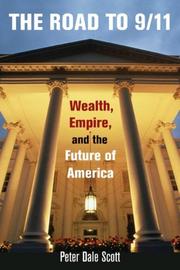
While the concept of a hidden hierarchy controlling elected politicians has roots in the U.S. dating back to at least the 1950s, the term "deep state" itself originated in Turkey in the 1990s (from the Turkish "derin devlet"). In Turkey, it referred to a secret alliance of military, intelligence, and organized crime elements operating independently of elected officials. In the U.S. context, the term began to be used more widely during the Obama administration but gained significant prominence and a partisan connotation during Donald Trump's presidency, starting around 2017. Initially, some scholars like Peter Dale Scott used the term in a left-leaning critique of covert government actions in his 2007 book The Road to 9/11. However, it evolved to become a core tenet of right-wing and pro-Trump conspiracy theories, shifting from a scholarly critique to a pejorative term for perceived internal adversaries within Washington.
Experts, fact-checkers, and official institutions largely dismiss the "Deep State" conspiracy theory as unfounded and lacking basis in reality. Critics argue that the claims often reflect a misunderstanding of government bureaucracy and the natural checks and balances within the U.S. system, rather than a tangible conspiracy. Political scientists and journalists point out that what proponents describe as a "deep state" is often the normal functioning of career civil servants, institutional resistance, or the established bureaucracy designed to provide continuity and expertise across administrations. While acknowledging that bureaucracies can be slow or resistant to change, mainstream analyses do not support the idea of a unified, clandestine network actively working to subvert democratically elected leadership. Many view the promotion of the "deep state" narrative as a dangerous conspiracy theory that undermines public trust in essential government functions and institutions.