Climate Change Denial
Theories alleging that global warming is a hoax or that the science is being manipulated for political and financial reasons.
Tracking Conspiracy Theories — Old, New, Emerging, Evolving
Theories alleging that global warming is a hoax or that the science is being manipulated for political and financial reasons.
Climate change denial is a form of science denial characterized by rejecting, refusing to acknowledge, disputing, or fighting the extensive evidence for anthropogenic (human-caused) global warming that has led to a scientific consensus on climate change. It often involves raising unreasonable doubts about the extent to which climate change is caused by humans, its effects on nature and human society, and understating the costs of adaptation while overstating the costs of mitigation. This phenomenon frequently employs rhetorical tactics to create the appearance of a scientific controversy where none exists, sometimes advancing conspiracy theories that suggest climate science is manipulated for hidden agendas.
Climate change denial significantly undermines efforts to act on or adapt to climate change, exerting a powerful influence on climate politics. It has been linked to delays in policy implementation, such as impeding the ratification of international agreements like the Kyoto Protocol. The spread of climate misinformation and disinformation can create a "false social reality" where the public underestimates the degree of scientific consensus and support for climate policies, hindering informed decision-making. Politically, climate change denial is associated with conservative economic policies and has influenced government administrations, such as the Trump administration, which adopted climate denial as official policy and withdrew the U.S. from the Paris Agreement. This denial can also exacerbate societal disruptions by undermining public trust in science, potentially impacting responses to other science-based recommendations, as seen with links to lower COVID-19 vaccination rates.
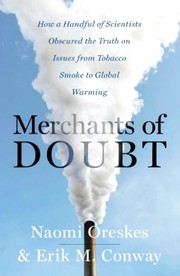
The conversation around global warming began in academic debates in the late 19th century, with initial scientific skepticism evolving as evidence accumulated. Organized climate change denial, however, emerged more prominently in the late 1980s, coinciding with the commencement of international climate negotiations. The fossil fuel industry, aware of the climatic impact of its products since at least the 1970s, played a primary role in organizing widespread denial campaigns to sow public disinformation, a strategy compared to the tobacco industry's denial of health hazards. These campaigns often involved funding contrarian scientists and free-market think tanks.
Over time, the tactics and arguments of climate change denial have adapted. Initially, there was a strong emphasis on denying the trend of warming itself. As scientific evidence for human contributions grew, the focus shifted to "attribution denial" (claiming natural causes) and "impact denial" (claiming climate change is harmless or beneficial). More recently, while outright denial has lost some mainstream credibility, new forms of misinformation like "climate delay" (delaying solutions) and "climate conspiracy narratives" (alleging hidden agendas behind climate action) have become more prominent. The movement has also strategically shifted to economic and moral arguments to bolster fossil fuel production.
The theory of climate change denial is overwhelmingly rejected by experts, fact-checkers, and official institutions. The scientific community has reached a strong consensus—between 97% and 100% of climate scientists agree that human activities are the primary cause of global warming. Organizations like the Intergovernmental Panel on Climate Change (IPCC) consistently affirm this consensus.
Mainstream experts view climate change denial as a form of science denial, often employing rhetorical tactics to create a false appearance of debate where there is none. They highlight that denial often relies on logical fallacies, cherry-picking data, promoting "fake experts," and making impossible demands of research. Studies have shown that the underlying science of global warming is straightforward, and observed changes are measurable and evident across economies, ecosystems, and human societies. The organized nature of climate change denial, particularly its funding by industrial and ideological interests, is well-documented and recognized as a significant barrier to climate action.