Charlie Kirk assassination
Conspiracy theories about the 2025 assassination of Charlie Kirk include claims of a 'professional hit' by a nation state or rogue elements of the government.
Tracking Conspiracy Theories — Old, New, Emerging, Evolving
Conspiracy theories about the 2025 assassination of Charlie Kirk include claims of a 'professional hit' by a nation state or rogue elements of the government.
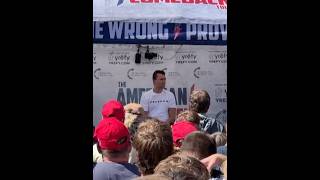
The "Charlie Kirk assassination" conspiracy theory emerged swiftly following the fatal shooting of conservative activist Charlie Kirk on September 10, 2025, at Utah Valley University. The theory generally claims that the official narrative—that Kirk was assassinated by 22-year-old Tyler James Robinson in a politically motivated attack—is false or incomplete. Proponents of the conspiracy suggest that the assassination was not the act of a lone gunman but rather a more complex plot orchestrated by various shadowy actors, ranging from foreign governments to elements within the U.S. government or even Kirk's own organization.
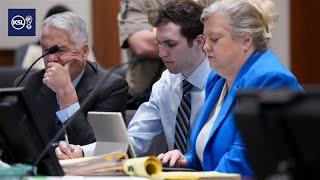
The "Charlie Kirk assassination" conspiracy theories have significantly exacerbated political polarization in the United States. They have fueled intense online speculation and misinformation campaigns across social media and fringe platforms, with influential figures pushing various unsubstantiated narratives. The theories have contributed to a climate where political violence is increasingly viewed as a legitimate form of action by a segment of the public. There have been calls for crackdowns on "political extremism" and mass firings or disciplinary actions against individuals perceived as celebrating Kirk's death or making critical comments about him. Additionally, these alternative narratives have even begun to "seep into the courtroom" in the murder case against Tyler Robinson. The propagation of antisemitic conspiracy theories linking Israel or Jewish people to the assassination has also been a notable impact.
The conspiracy theories surrounding Charlie Kirk's assassination began to proliferate almost immediately after his death on September 10, 2025, particularly after authorities released alleged text messages from the suspect, Tyler Robinson. Initial skepticism focused on the authenticity of these digital communications, with some social media users and influencers claiming they were fabricated due to their tone and detail. From this point, the theories rapidly evolved and diversified. They moved beyond questioning the lone gunman narrative to implicating a wide array of powerful actors, including foreign governments like Israel or the U.S. "Deep State," and even internal conservative groups or Kirk's family. The "extraordinary circumstances" of Kirk's murder, including initial lack of detailed information about Robinson, created a vacuum that was quickly filled by existing conspiracy-minded worldviews. The theories have continued to adapt, drawing "spurious connections" between disparate elements like flight logs and unverified tips.
Experts, fact-checkers, and official institutions largely dismiss the various "Charlie Kirk assassination" conspiracy theories as baseless and unfounded. Law enforcement and prosecutors maintain that Tyler Robinson acted alone and that the attack was politically motivated, citing compelling evidence including the murder weapon, DNA, bullet casings, security footage, and Robinson's alleged confessions and text messages. Legal experts, such as Steven B. Duke of Yale Law School, have bluntly stated that claims of fabricated evidence, like the text messages, are implausible. Academics studying conspiracy theories note that such theories often emerge after high-profile violent events, driven by pre-existing worldviews that seek conspiratorial explanations for social and political circumstances, and that people tend to gravitate towards content that reinforces their existing beliefs. They emphasize that these theories, particularly those with antisemitic undertones, exploit anger and grief to manipulate public opinion and can foment further violence.