9/11 Controlled Demolition
The theory that the World Trade Center towers were destroyed by controlled demolitions rather than the impact of hijacked aircraft and resulting fires.
Tracking Conspiracy Theories — Old, New, Emerging, Evolving
The theory that the World Trade Center towers were destroyed by controlled demolitions rather than the impact of hijacked aircraft and resulting fires.
The "9/11 Controlled Demolition" conspiracy theory posits that the collapse of the World Trade Center (WTC) Twin Towers (WTC 1 and WTC 2) and 7 World Trade Center (WTC 7) on September 11, 2001, was not solely a result of the airliner impacts and subsequent fires, but rather due to pre-planted explosives that caused a controlled demolition. This theory is a significant component of broader 9/11 conspiracy theories, claiming that additional energy was involved to weaken the buildings' structures beyond what the aircraft impacts and fires could achieve alone.
The "9/11 Controlled Demolition" theory has fueled the "9/11 Truth movement," a collective of individuals and groups who challenge the official accounts of the September 11th attacks. This movement has actively promoted its claims through various mediums, including documentaries, websites, and public lectures, gaining a significant following, particularly online. The theory has contributed to public skepticism regarding government narratives and has been adopted by some well-known public figures, further amplifying its reach.
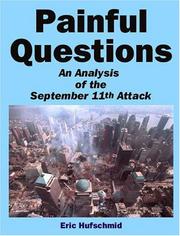
The controlled demolition theories were first suggested shortly after the September 2001 attacks. Early advocates, such as Eric Hufschmid, whose book Painful Questions: An Analysis of the September 11th Attack was published in September 2002, explicitly promoted the theory. Over time, the theory evolved to incorporate specific technical arguments and analyses, often focusing on perceived inconsistencies in official reports and presenting alternative explanations for phenomena observed during the collapses, such as the speed of descent and the presence of dust clouds. The suggestion of thermite as a demolition agent, proposed by Steven E. Jones in 2006, marked a notable evolution in the technical claims of the theory.
Official investigations and the vast majority of experts in structural mechanics and engineering reject the "9/11 Controlled Demolition" theory. The National Institute of Standards and Technology (NIST) conducted a comprehensive investigation into the collapse of the WTC buildings and concluded that the collapses were caused by a combination of structural damage from the aircraft impacts and the weakening of steel components by the resulting fires. NIST found no evidence to corroborate alternative hypotheses, including those suggesting controlled demolition using explosives.
Experts explain the rapid and complete collapse as a fire-induced, gravity-driven progressive collapse, where the failure of damaged upper floors led to a cascading failure of the floors below. The "puffs of dust" are attributed to air and pulverized building materials being ejected as floors collapsed. Regarding the claim of molten steel, experts state that while jet fuel fires do not melt steel, the intense and prolonged heat significantly softened and weakened the steel structures, leading to their failure. The collapse of WTC 7 was also determined by NIST to be a fire-induced progressive collapse, caused by uncontrolled fires that weakened a critical structural column. The FBI's extensive investigation also found no evidence supporting explosive devices.